
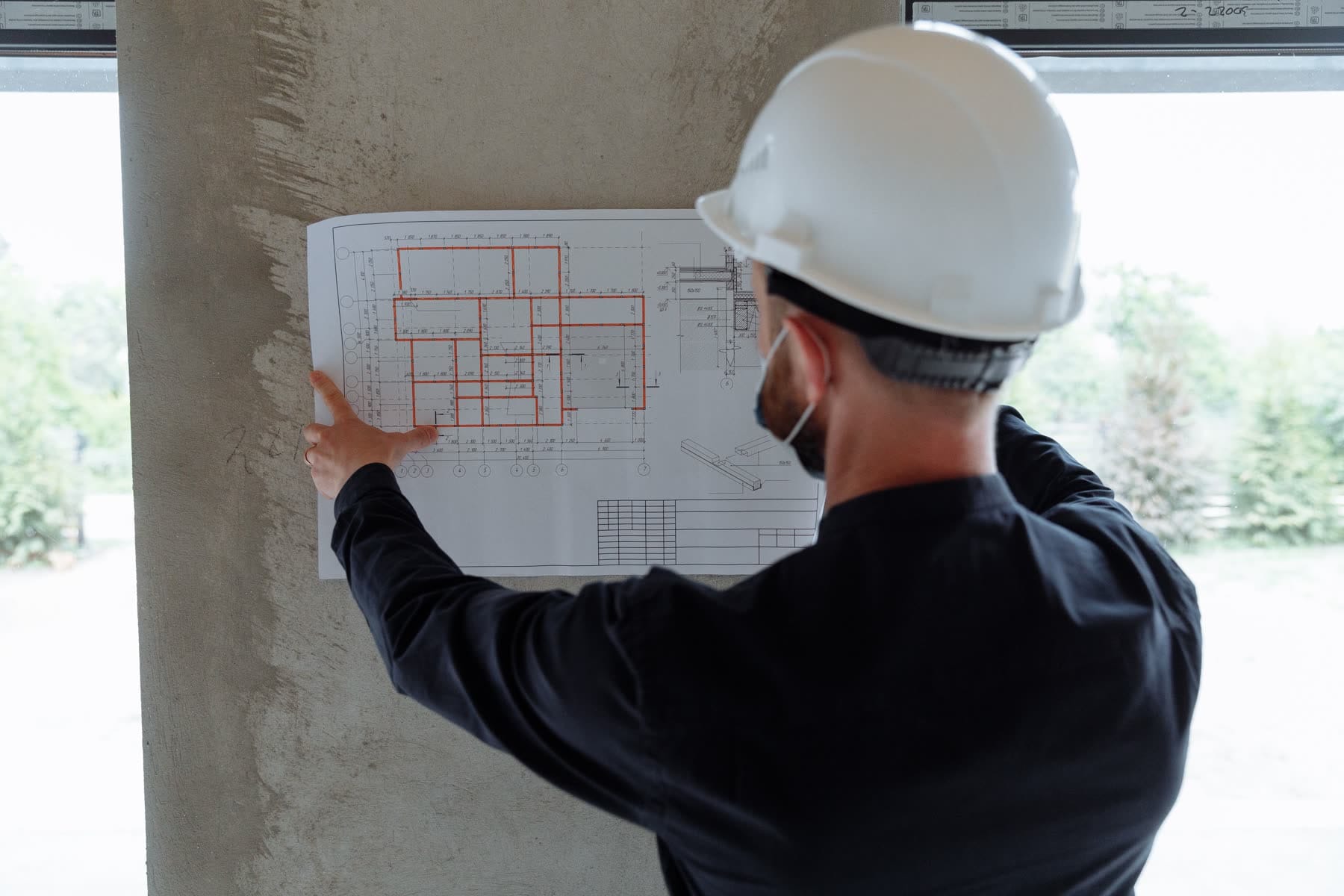
IWP development
IWPs dissected from released CWPs in the 3D model, scoped for one foreman and crew for 7 to 10 days, named from the parent CWP so the package stays traceable in the schedule, the material system, and the model.
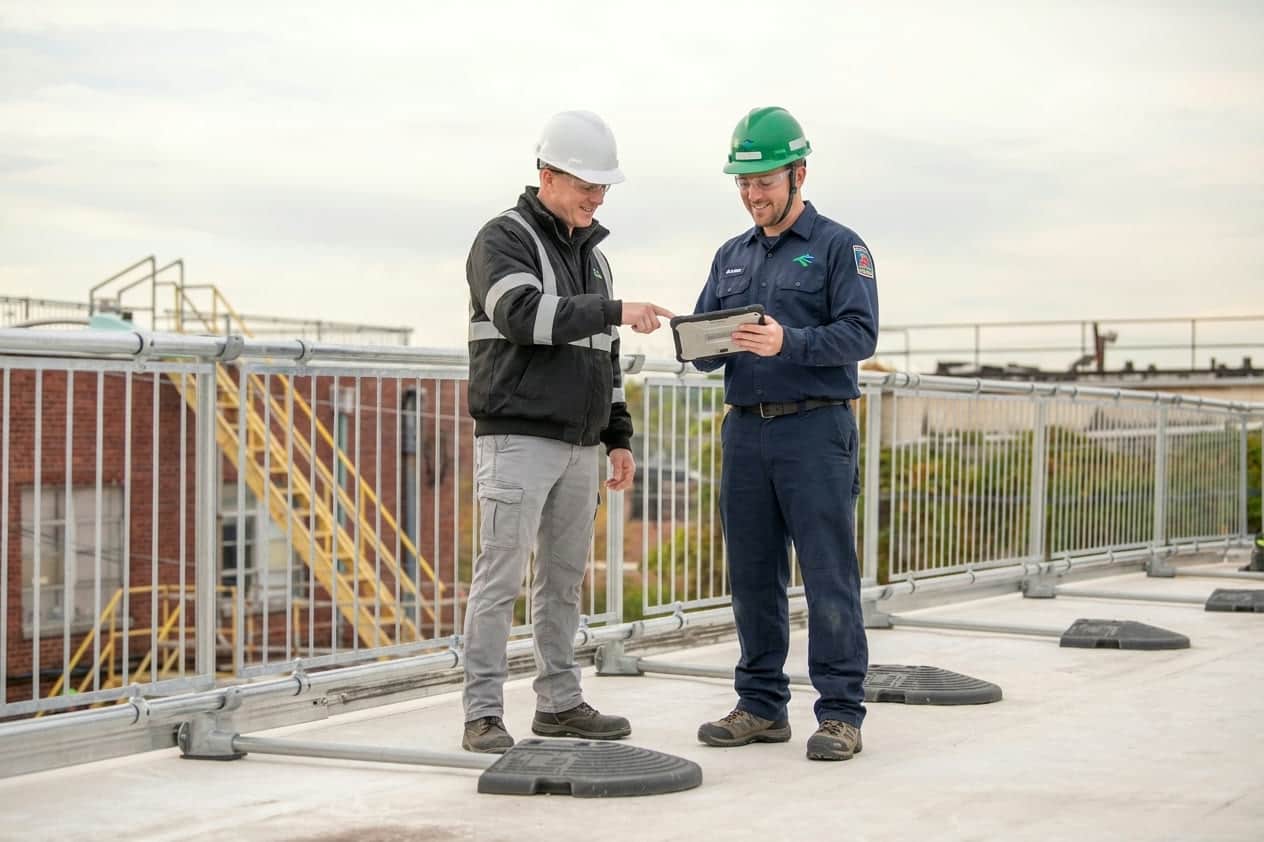
We put planners with field experience on your project to turn released CWPs into constraint-free IWPs and run the lookahead your general foremen plan crews against.
IWPs dissected from released CWPs in the 3D model, scoped for one foreman and crew for 7 to 10 days, named from the parent CWP so the package stays traceable in the schedule, the material system, and the model.
Material verified at CWP level, scaffold and access coordinated, permits tracked, and RFIs and engineering HOLDs logged as constraints on the package, worked to closure before release.
A four-week lookahead of sequenced IWPs maintained weekly with the general foremen, backed by a 90-day CWP readiness review with construction management.
Mobilize
Planners with field experience join the construction team, and the software is configured for IWP development, constraint tracking, and lookahead planning.
Build
IWPs are dissected from released CWPs with the general foremen and scoped in the 3D model, with drawings and verified material attached.
Clear
Every constraint is logged against the package and worked to closure; an IWP releases when its constraint log reads zero.
Execute and close
Crews work the released package, productivity reports daily by foreman and IWP, and closeout collects the quality documentation that lets the CWP close behind it.
Workface planning is the construction end of advanced work packaging, the stage where released CWPs are dissected into work a single crew can finish. The unit is the IWP, scoped for one foreman and crew for 7 to 10 days, cut from a single CWP, planned at Level 4 in the AWP software while the Level 3 schedule stays at CWP level, and sequenced through a four-week lookahead that follows the path of construction. A package releases to the field when its drawings are issued IFC, its material is received and verified, and every constraint is closed.
We staff the planner role with people who have run work in the field: hands-on craft skills, supervisory experience, reporting to the superintendent. IWPs are built with the general foremen who will execute them. Our planners scope each package in the 3D model, attach the drawings, verify material readiness at CWP level, and log every constraint (scaffold, access, permits, RFIs, engineering HOLDs) in openAWP or the AWP software your project already runs. The lookahead is maintained weekly with construction management; when an engineering change notice lands, the impacted IWPs come out of the sequence, crews hold on the constraint-free backlog, and the packages re-issue clean against the revised drawings.
The same discipline runs through completion. Test work packages carry the Pre-Hydro, Hydro, and Post-Hydro scope, tied to IWPs by line number; past 70% construction the lookahead re-sequences to the turnover order, and remaining scope re-packages into system work packages that carry real hours. IWP aging is the number we watch: a package scoped for 7 to 10 days that stays open longer means a constraint escaped the system, and someone is paying craft rates while it waits. Our team has run workface planning on capital projects from $20M to $10B since 2012. The workface planning resource hub covers the method in depth; this page covers what we deliver when we run it on your project.
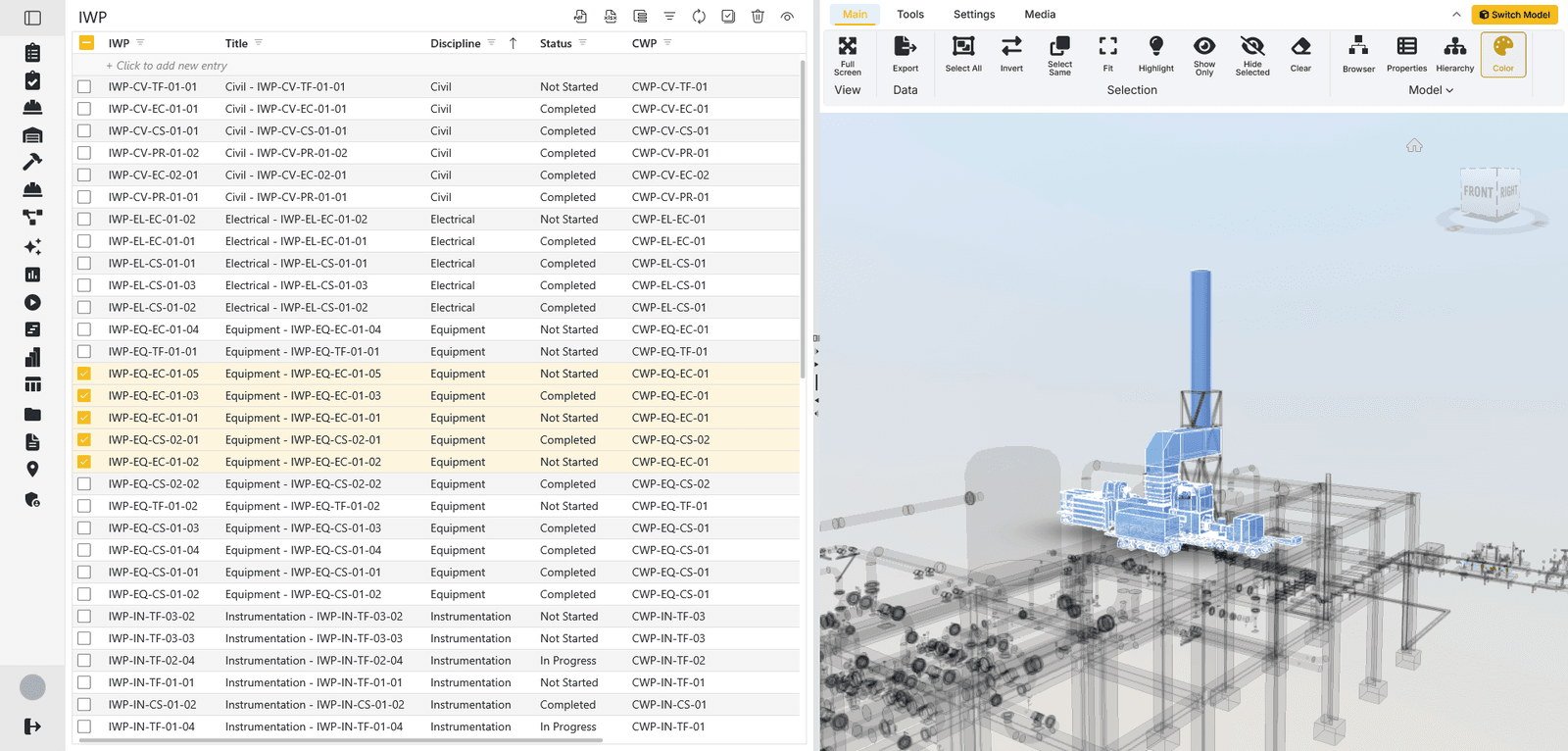 openAWPWork packaging software for IWP development, constraint tracking, and lookahead planning, deployed on your own infrastructure.
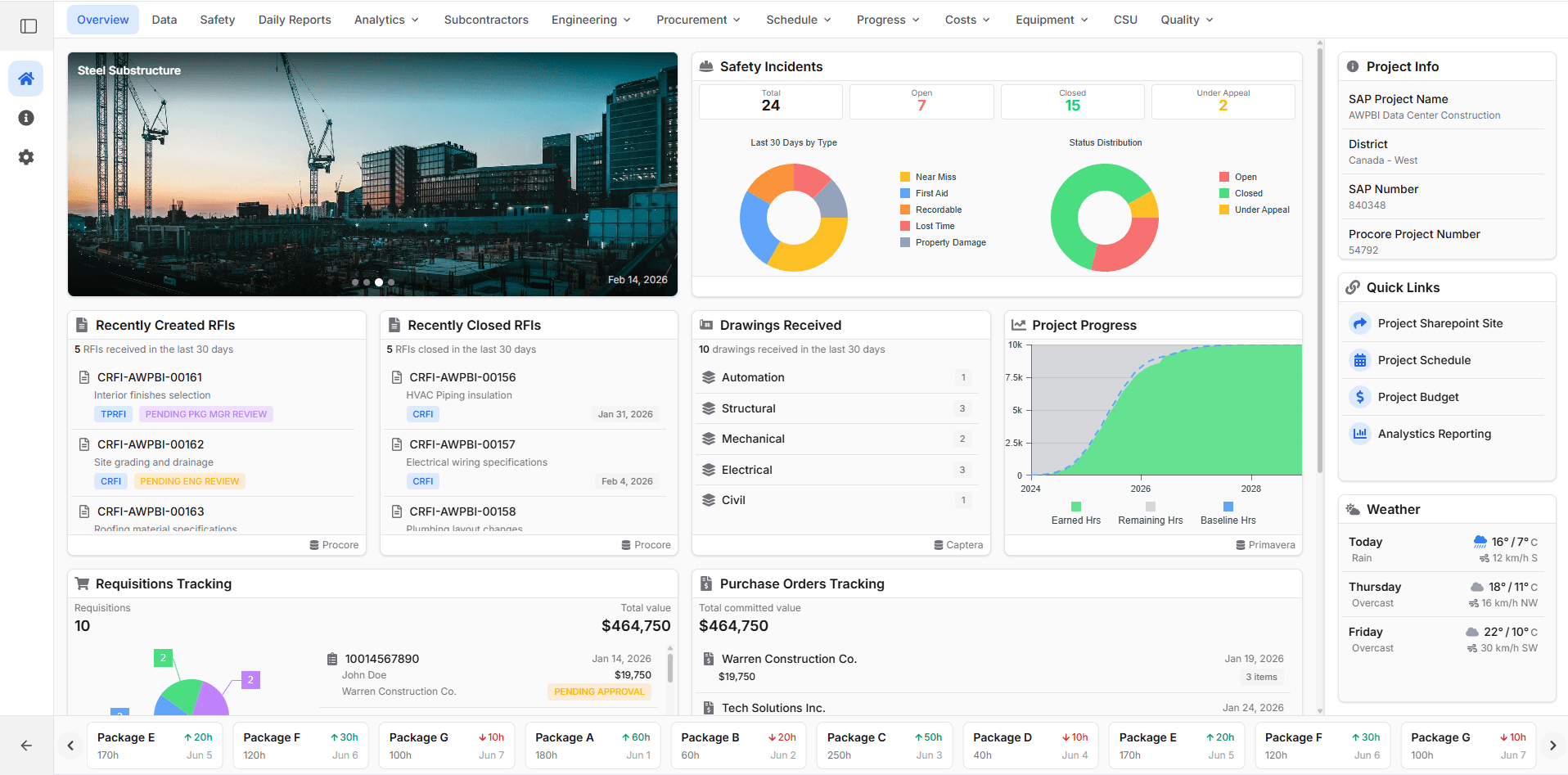 Project PortalThe front end of the common data environment: a navigable web app where every stakeholder reads status, reporting, and 3D.
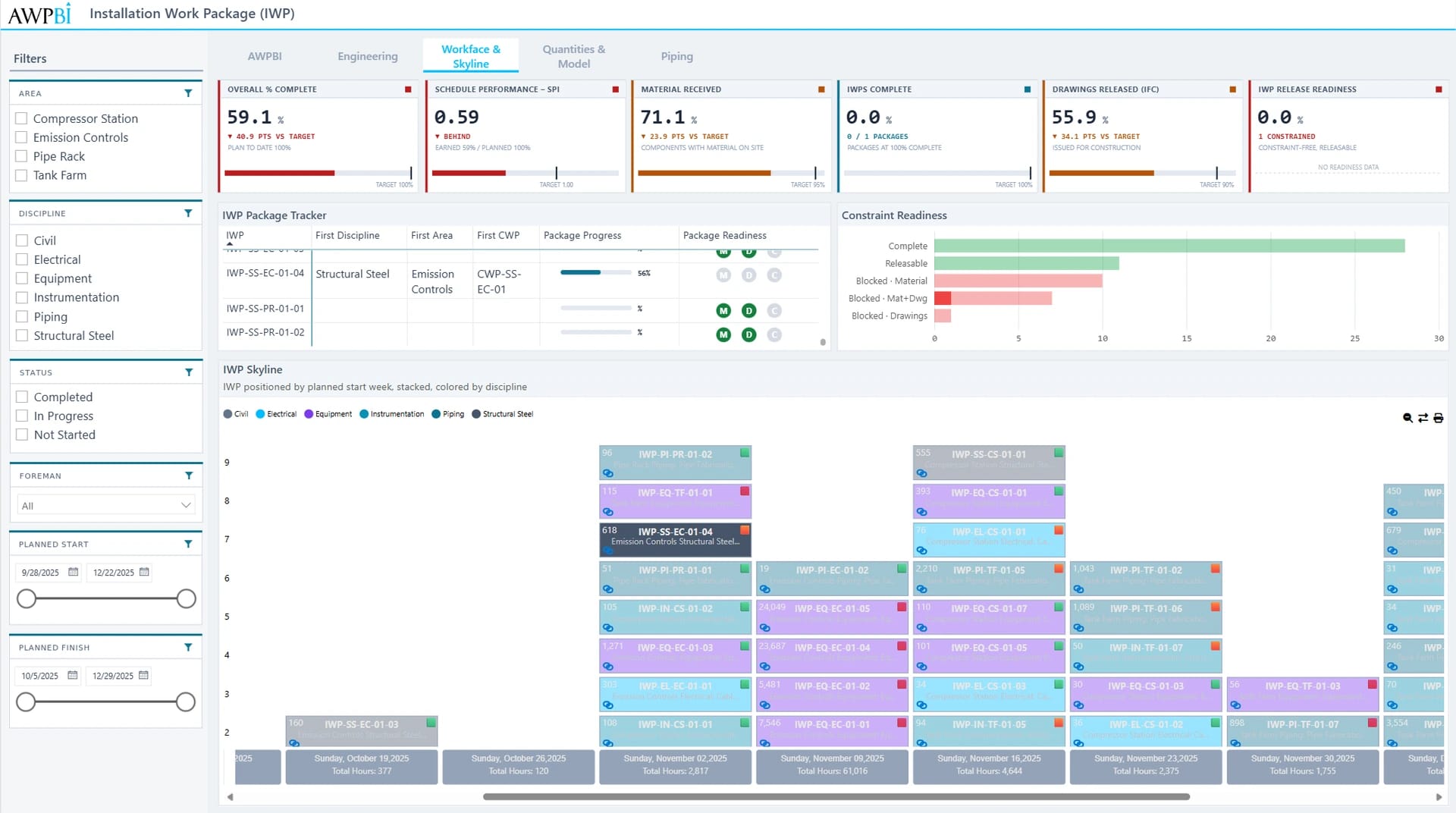 SkylineA free, certified Power BI visual that plots package status against schedule dates, with EWP, PWP, CWP, IWP, and System skyline types.
A working session with your construction management team scopes the first work area, the planner coverage, and the software setup.