We set up and run information management on capital projects, so a fact born in a datasheet is still the same fact in the model, the purchase order, and the maintenance system years later.
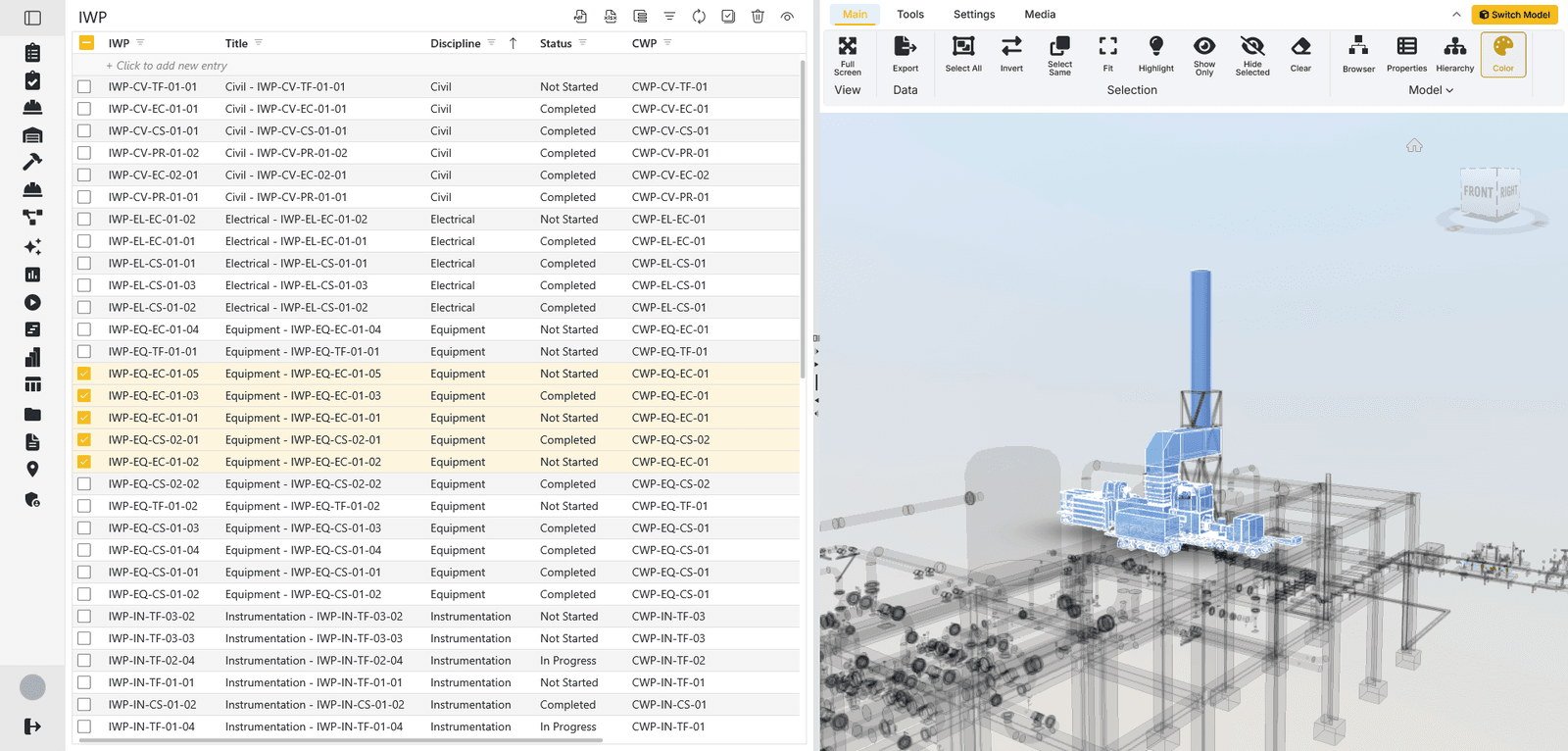
The IM procedure, Data Requirements, and 3D model attribute specifications, written for your project and workshopped with every discipline before execution habits form. Compliance is verified before each EWP releases IFC.
2
Reference data libraries
Equipment and document class libraries, the plant breakdown structure, and controlled code lists, aligned to the CFIHOS industry standard where it fits your systems, so every organization classifies data the same way.
3
Tag governance
A Project Tagging Philosophy and one Tag Register as the single source of truth, with reservation lead times, parent and child relationships for skids and assemblies, and weekly reconciliation against P&IDs, models, MTOs, and purchase orders.
Document and revision control
Numbering standards, placeholder discipline on fixed lead times, and a Document Allocation Matrix that ties every document to its package. Revisions hold from first issue through redlines and as-builts, review categories and response codes decide what may proceed, and the MDR and the DMS reconcile on fixed SLAs.
Supplier information management
Information requirements written into requisitions, RFQs, and purchase orders, deliverable groups tied to need-by dates and model reviews, and structured BOMs and packing lists your warehouse can receive against.
Data validation
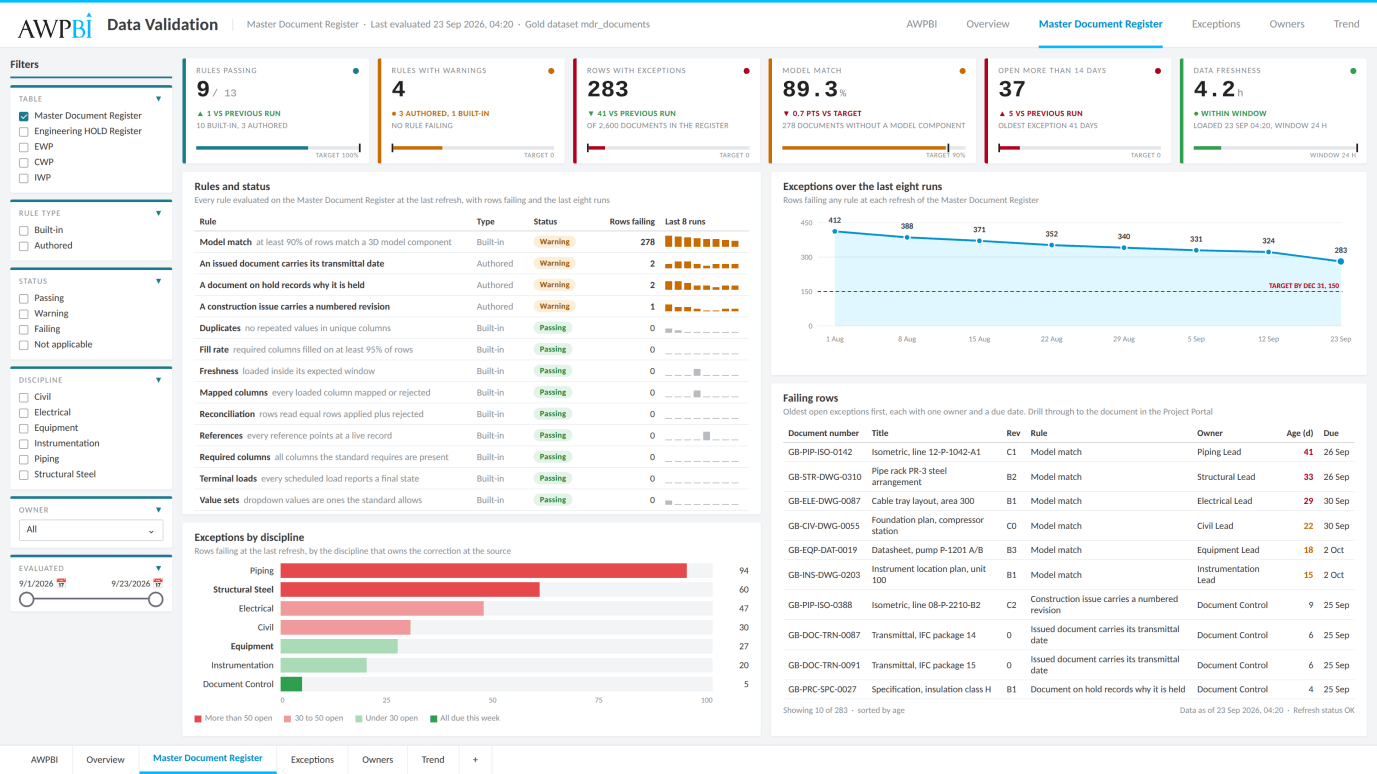
Automated and manual validations, run standalone or inside a wider engagement, from the path of construction to engineering, procurement, vendors, construction, and operations. Every tag, every promise, delivered as agreed. We also fix the failures.
How it works
1step
Framework definition
Write the IM procedure, the Data Requirements, and the reference data libraries with every discipline at the table, before execution habits form.
2step
Governance setup
Stand up the Tag Register, document numbering, placeholder and allocation workflows, and the CDE structure against your actual project systems.
3step
Operation
Run the weekly rhythm: data quality, tag and document status, and supplier compliance, with every action owned and tracked to closure.
4step
Progressive handover
Validate and hand over data in parallel with the work, so turnover is a confirmation.
Packages, materials, tests, and turnover all travel on data, and every hop between systems is a chance for a fact to break. Information management is the discipline of documents, document attributes, equipment data, models, and the relationships between them, practiced so the fact survives. The failures it prevents are quiet and specific. A drawing renamed after issuance orphans its revision history. A tag written two ways in two systems is two tags, and every downstream reconciliation inherits the difference. A register that disagrees with the DMS means nobody knows for certain that the field is building from current revisions.
We set up and run that discipline for owners and contractors, and the work starts on paper. The IM procedure, the Data Requirements, and the specifications for 3D model attributes are workshopped with every discipline at the table and agreed before execution habits form. The Reference Data Library carries the equipment and document class libraries, the plant breakdown structure, and the controlled code lists every organization classifies against. Identity is issued, never invented. One Tag Register is the source of truth, reconciled weekly against P&IDs, models, MTOs, and purchase orders, and tags are reserved early enough to reach the model before the MTO extracts, the MTO before the purchase order line exists, and the packing list before receiving has to find the material. On a project running advanced work packaging, compliance is a release gate. Data requirements are verified before each EWP reaches IFC, and a package can be rejected on data alone.
Supplier information carries the same governance. Requirements travel in the requisition, the RFQ, and the purchase order, with deliverable groups timed against model reviews, so vendor data arrives before the design that depends on it. Through execution the discipline runs as a weekly rhythm, with data quality, tag and document status, and supplier compliance worked to closure. Automated and manual validations compare the systems to each other, and a mismatch surfaces while the engineer who made it is still on the project. Handover is progressive, governed by an Information Handover Plan and run in parallel with the work, so turnover confirms what the project already holds. Our team has run information management alongside AWP and workface planning on capital projects from $20M to $10B.
Talk to consultants who have written the frameworks and run the weekly rhythm on live capital projects. The registers, validations, and reporting we build stay yours when the engagement ends.