We design, build, and run the orchestration layer of a capital project: P6, the 3D model, materials, the ERP, and the CDE working as one governed system, with the Project Portal in front, on infrastructure you own.
An inventory of every system that carries project data, from P6 and the model platforms to Smart Materials, the ERP, and the DMS, with field ownership and manual joins written down and a rebuild sequence ranked with the people who will live with it.
2
Target architecture
The design of the governed layer that connects your systems, with every interface, refresh cadence, and ownership rule recorded before the build starts.
3
System orchestration
Scheduled, monitored data flows between P6, the models, Smart Materials, the ERP, and the CDE, built and run with our data integration practice.
Data validation
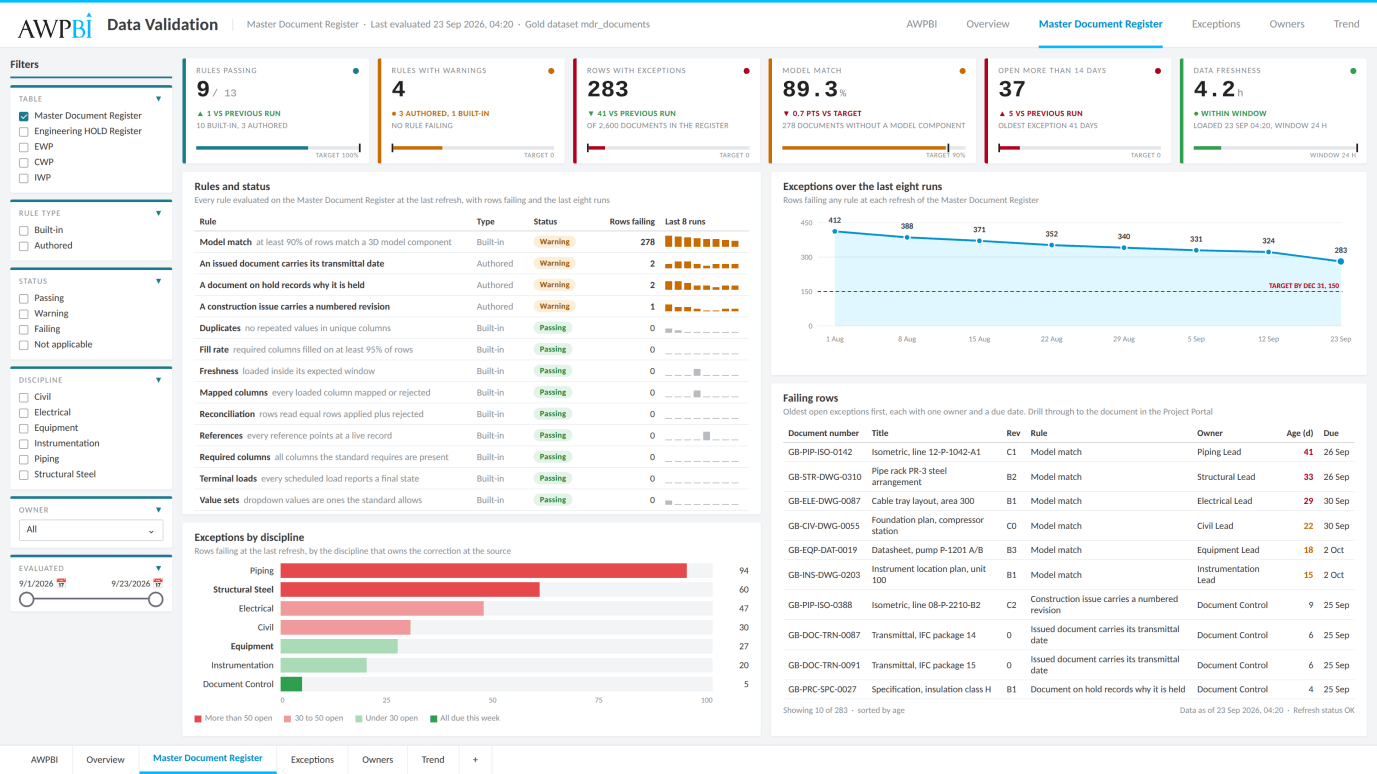
Automatic and manual checks that verify every system against the Data Requirements, each exception published with an owner and a closure date. Offered within a wider engagement or standalone, and fixing the failures is part of the work.
Project Portal delivery
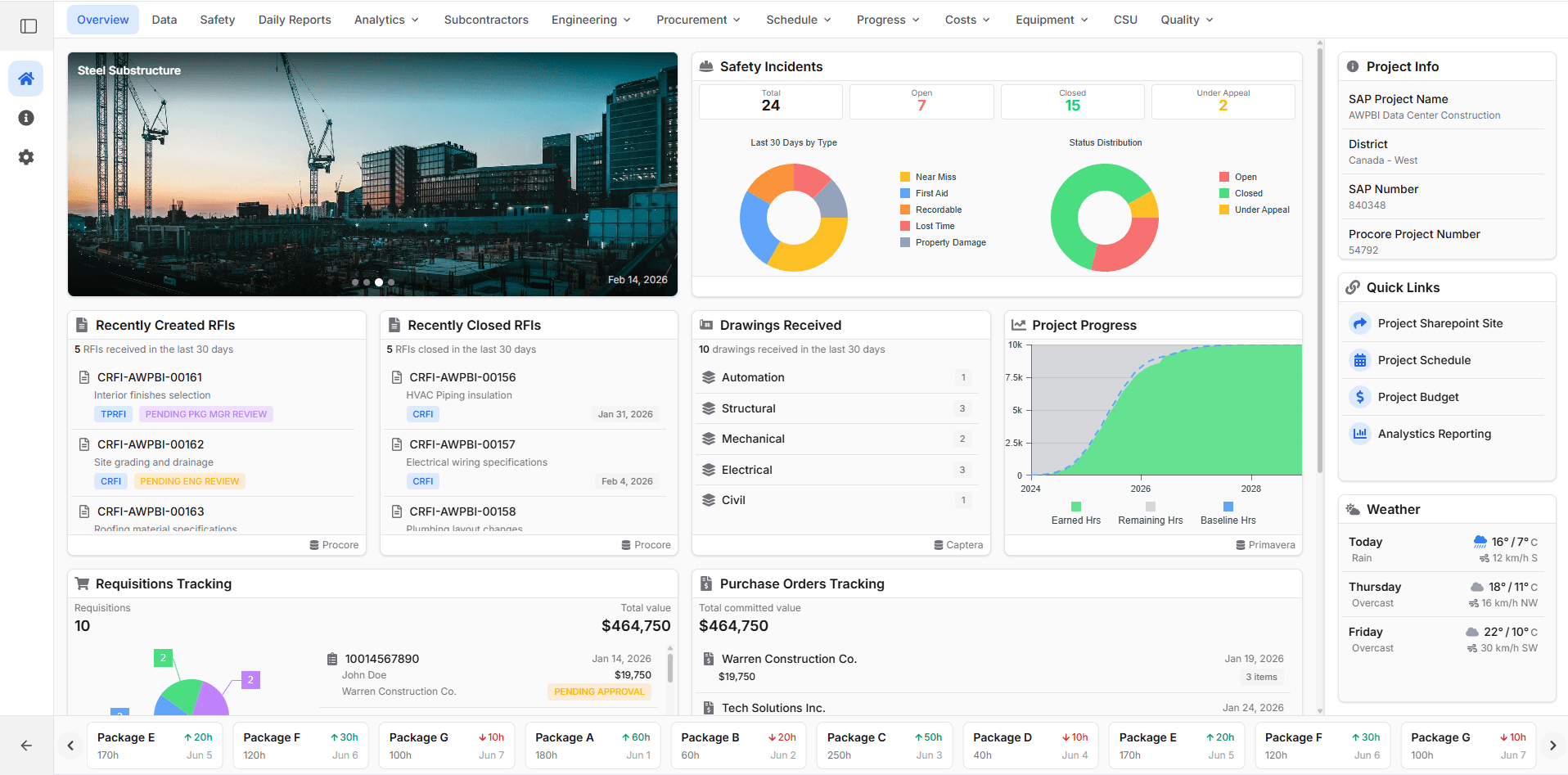
The front end of the common data environment, built per project, carrying reporting, 3D, 4D, and QC behind one address.
Enablement and handover
Working sessions and training with each team, and documentation written so your people run the stack after we leave.
How it works
1step
Assess
Sit with the owners of each system, list what it carries and who reads it, and map the joins maintained by hand.
2step
Design
Agree the target architecture and write the Data Requirements and Specifications the build follows.
3step
Build and prove
Stand up pipelines, validation, and the portal one workflow at a time, each proven against live project data.
4step
Hand over
Document and train, then transfer the stack, or keep us on under managed recurring services.
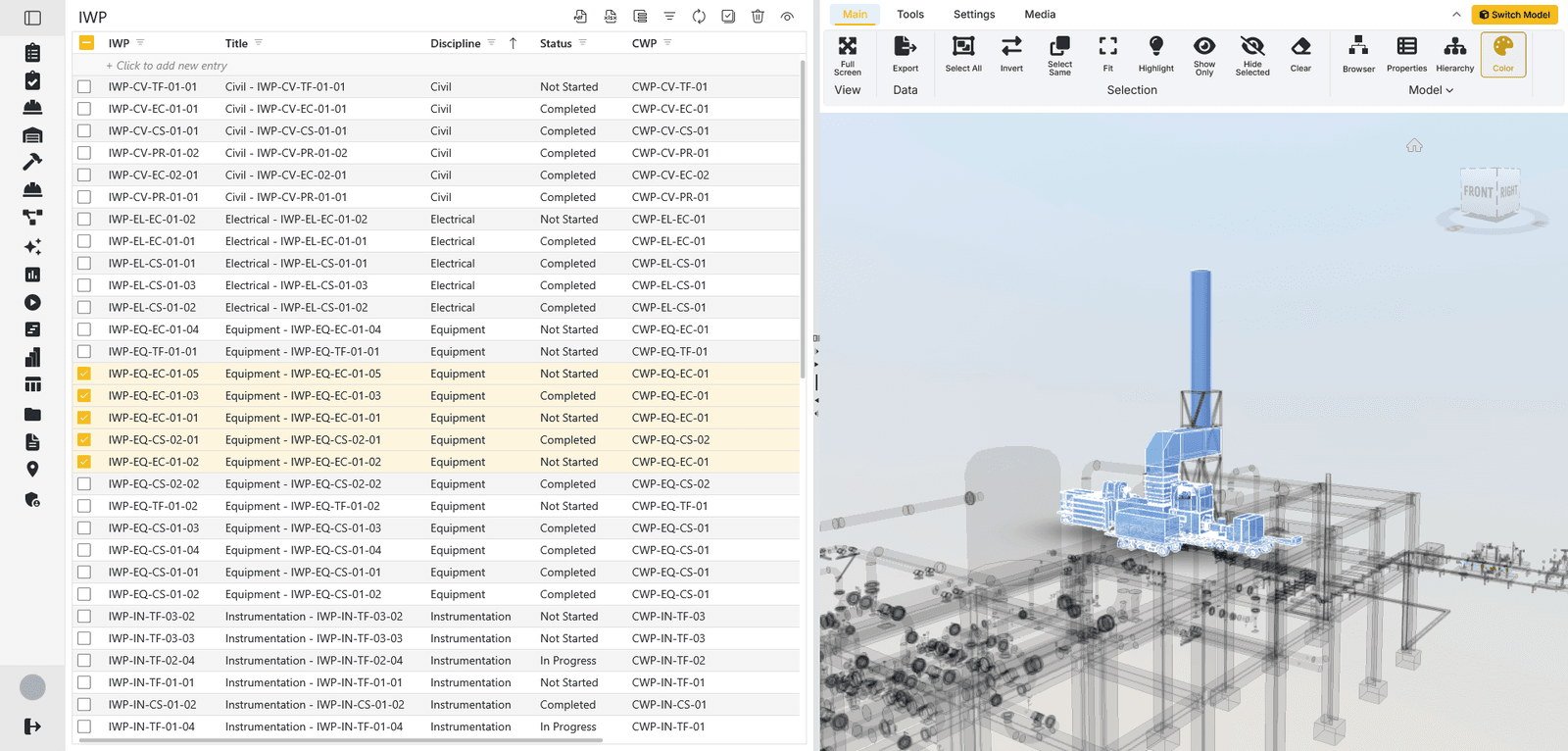
A capital project runs on more systems than any one person ever sees. The schedule sits in Primavera P6, the model in Smart 3D and Navisworks, materials and purchase orders in Smart Materials, cost in the ERP, documents in the DMS, packages in the AWP software. Each system does its job. The project's operating picture lives in the connections between them, and on many projects those connections are a person carrying data from one system to another. Hours go to assembly and reconciliation, and the weekly meeting opens with an argument about whose number is right. Digital transformation, as we practice it, is making those systems work as one.
The work starts with a written assessment. We sit with the owners of each system, record which fields each one owns and where a person carries data between them, and sequence the rebuild one workflow at a time, so the project signs the order of work before anything is built. The build follows the discipline of information management. Procedures, Data Requirements, Reference Libraries, and Specifications are written first, so every system has one definition to build against. Our data integration practice connects the systems on a monitored schedule. Automatic and manual validation checks compare them from path of construction through engineering, procurement, vendors, construction, and operations, and when a check fails, the fix is in scope. Every tag, every promise, delivered as agreed. The Project Portal stands in front of all of it, one navigable address with a section for every discipline, so each stakeholder gets what they want and, more importantly, what they need.
A new layer changes reports faster than it changes habits, so working sessions and training are scoped like the software, and each rebuilt workflow goes live with the team that owns it before the next one starts. Our team has delivered advanced work packaging, workface planning, and information management on capital projects from $20M to $10B since 2012, and Tier 1 EPCs run our software and embedded teams in production today. Everything we stand up deploys on your infrastructure and stays with you when the engagement ends.