
Rules of credit
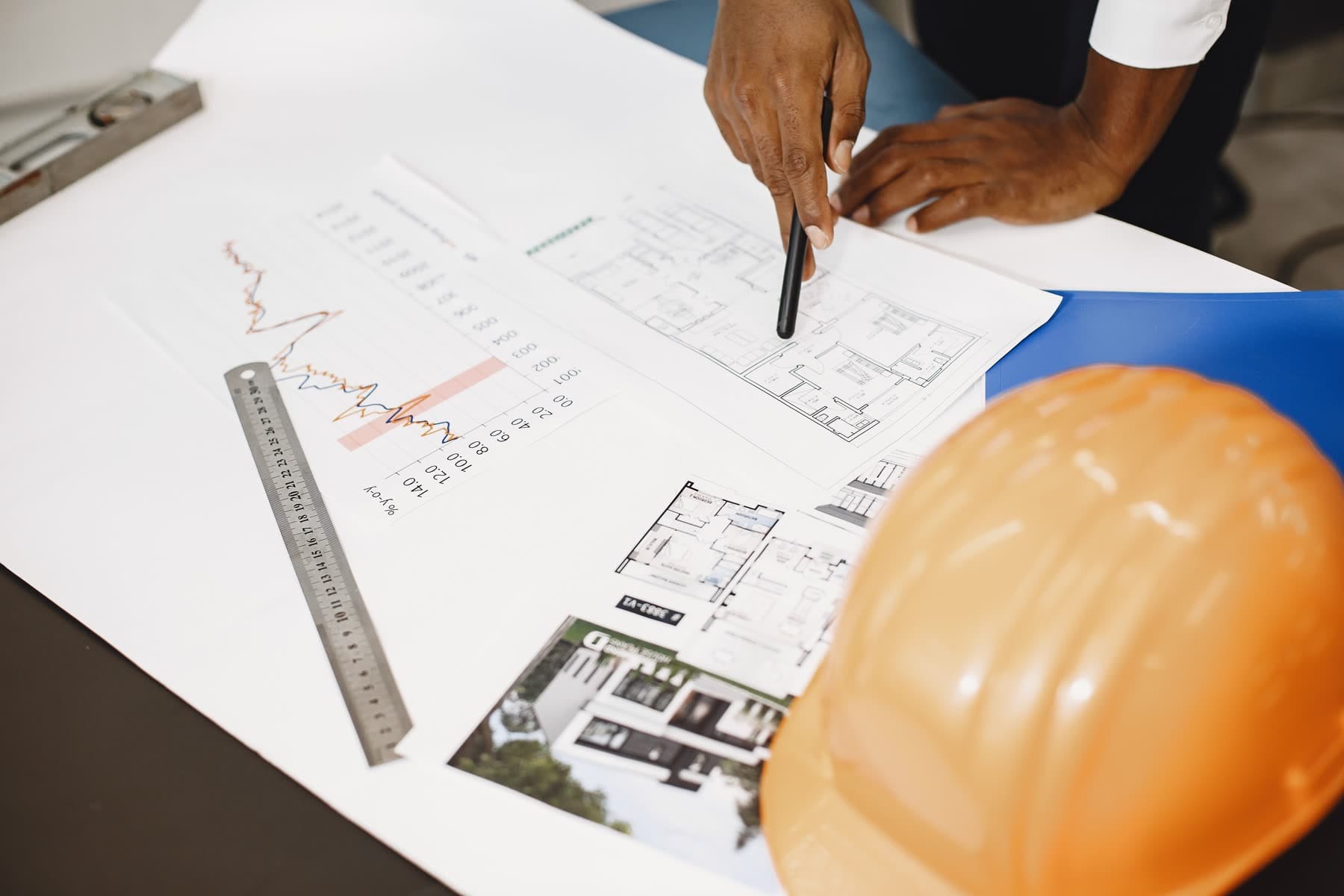
Credit agreed per package type and recorded in the project procedures: EWPs earn binary credit per document issued IFC, PWPs earn weighted credit from purchase order to site receipt, and CWP progress rolls up from closed IWPs.
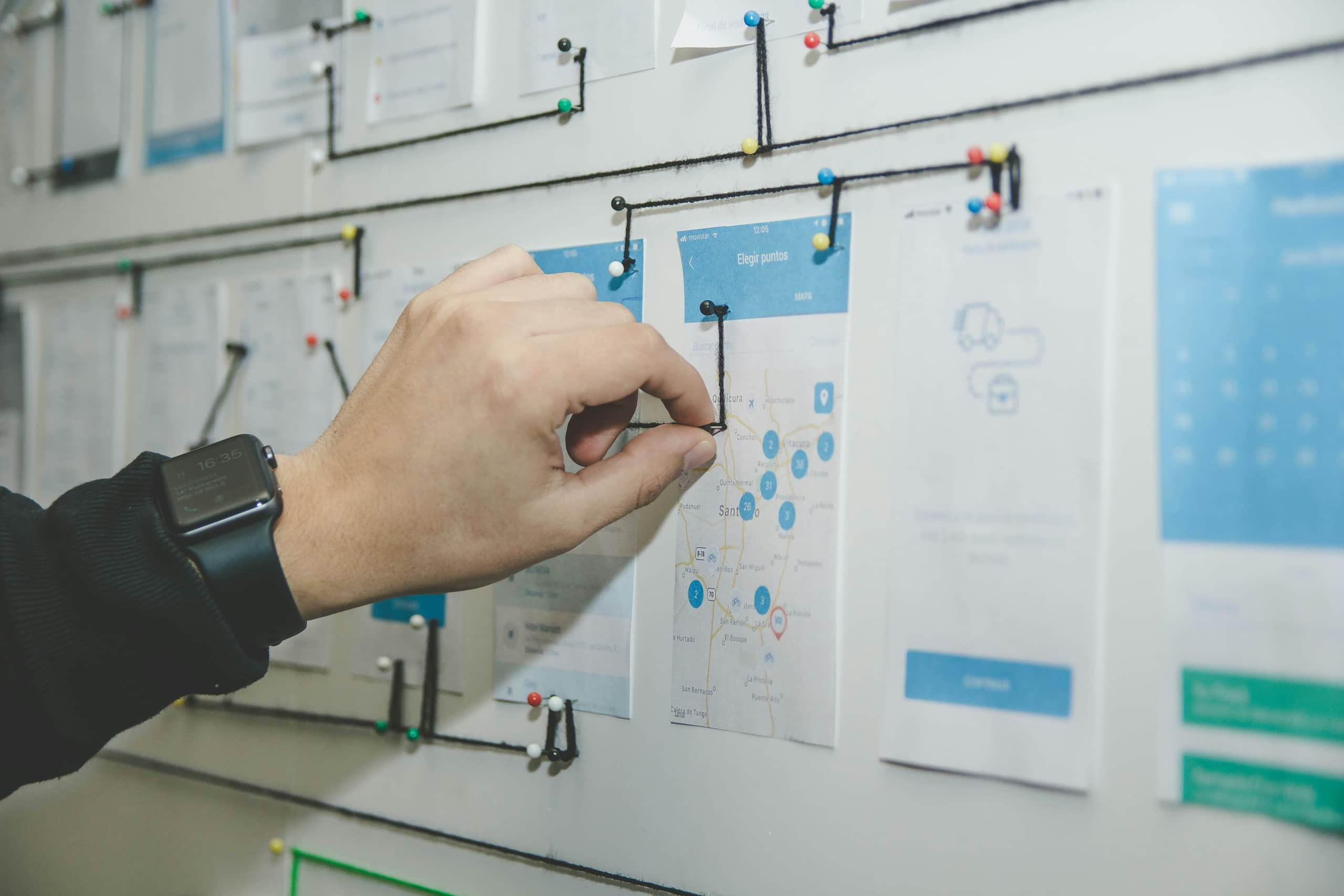
We stand up and run package-based project controls: objective rules of credit, a Primavera P6 schedule built on work packages with logic between them, and progress that rolls up from IWPs closed at the workface.
Credit agreed per package type and recorded in the project procedures: EWPs earn binary credit per document issued IFC, PWPs earn weighted credit from purchase order to site receipt, and CWP progress rolls up from closed IWPs.
A Level 3 schedule of work packages as real activities with durations and logic, coded by CWA, discipline, package type, and contractor, with EWP release dates linked to CWP planned starts.
Document status from the DMS, receipt status from materials, and IWP closure from the workface planning system, connected so earned progress flows without manual reconciliation.
Baseline setup
Agree the WBS, the package list, and the rules of credit with your project team, and record them in the controls procedures.
Schedule integration
Build or restructure the Primavera P6 schedule around work packages, with the logic ties and activity coding package-based reporting depends on.
Progress capture
Connect document status, material receipt, and IWP closure into the controls data, so earned progress flows from the systems of record.
Reporting cadence
Stand up the weekly Power BI reporting, run the first cycles with your team, and train them to run it without us.
On a project running advanced work packaging, performance is measured by work package. An EWP earns credit as its documents are issued IFC, binary per document, with the full MDR document set as the denominator. A PWP earns weighted credit across its lifecycle, from purchase order through fabrication and inspection to receipt on site. Construction percent complete rolls up from IWPs closed at the workface, each against a fixed closure definition. A document is IFC in the DMS or it is not; a PWP is complete at 100% site receipt. The percentage that reaches leadership is the percentage the project earned.
That measurement needs a schedule built for it. We build or restructure the Level 3 schedule with your scheduling team in Primavera P6, so work packages sit in it as real activities with durations, logic, and resources. Every construction activity carries a CWP, and every EWP is a single activity under its package number. Activity coding carries CWA, discipline, package type, and contractor. EWP release dates link to CWP planned starts, material availability sits in the construction logic, and baseline and current dates are held for every package alongside actual starts and finishes. IWPs stay at Level 4 in the workface planning system, and the Level 3 schedule holds activities of about eight weeks with package logic between them.
The reporting runs on a weekly cadence the project can plan against. Skyline views read package status against schedule dates across EWP, PWP, and CWP, so misalignment between the MDR and the schedule is visible before it reaches the field. Burndown curves show work remaining and the forecast to complete as packages close. Underneath the visuals, alignment checks compare the AWP Matrix, the Level 3 schedule, the MDR, and the AWP software, and each discrepancy publishes with an owner and a closure date. Our team has run project controls this way on capital projects from $20M to $10B. The schedule stays in your P6, the datasets and reports in your Power BI tenant, and all of it stays with your team when the engagement ends.
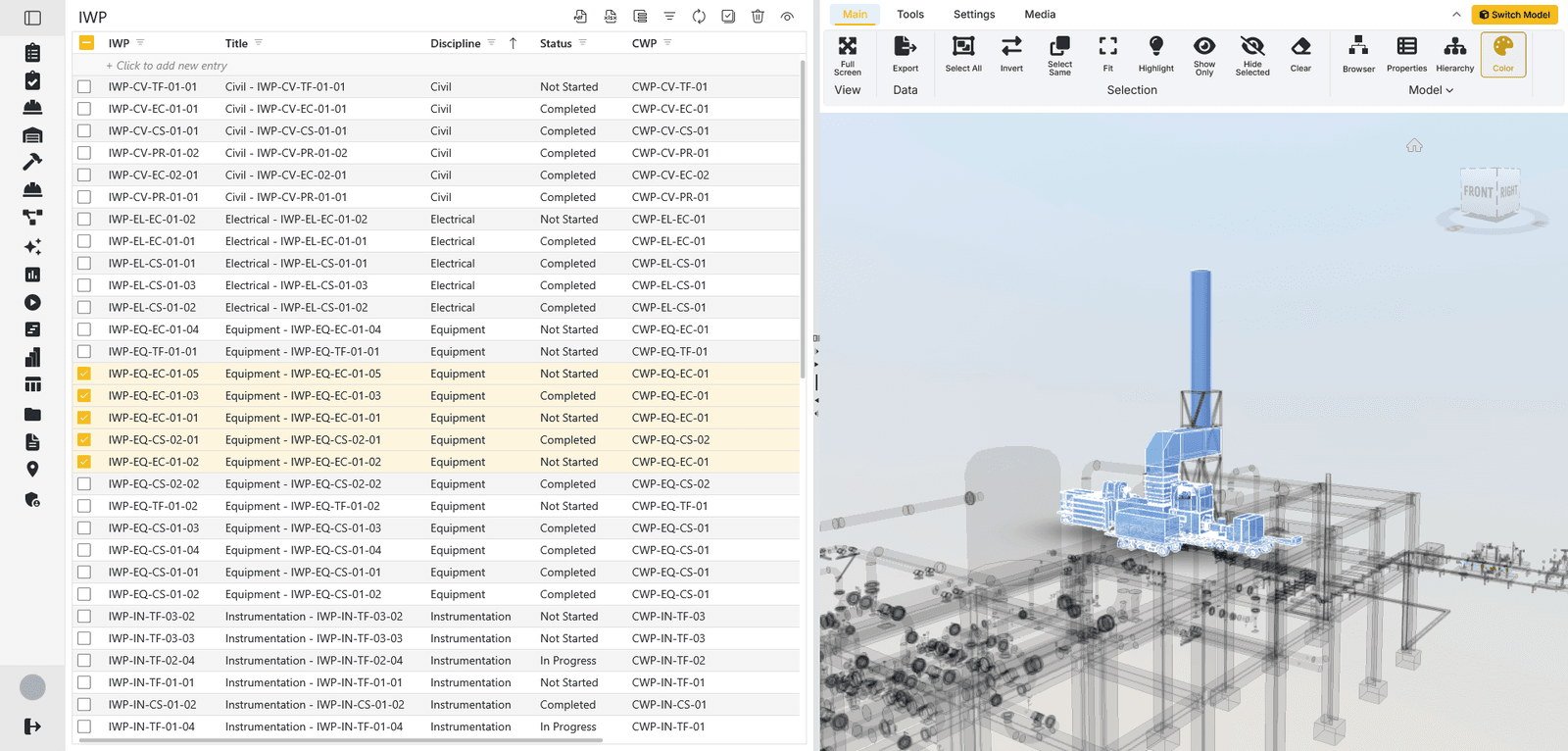 openAWPWork packaging software that carries the package status, dates, and progress the schedule and the reports read, deployed on your own infrastructure.
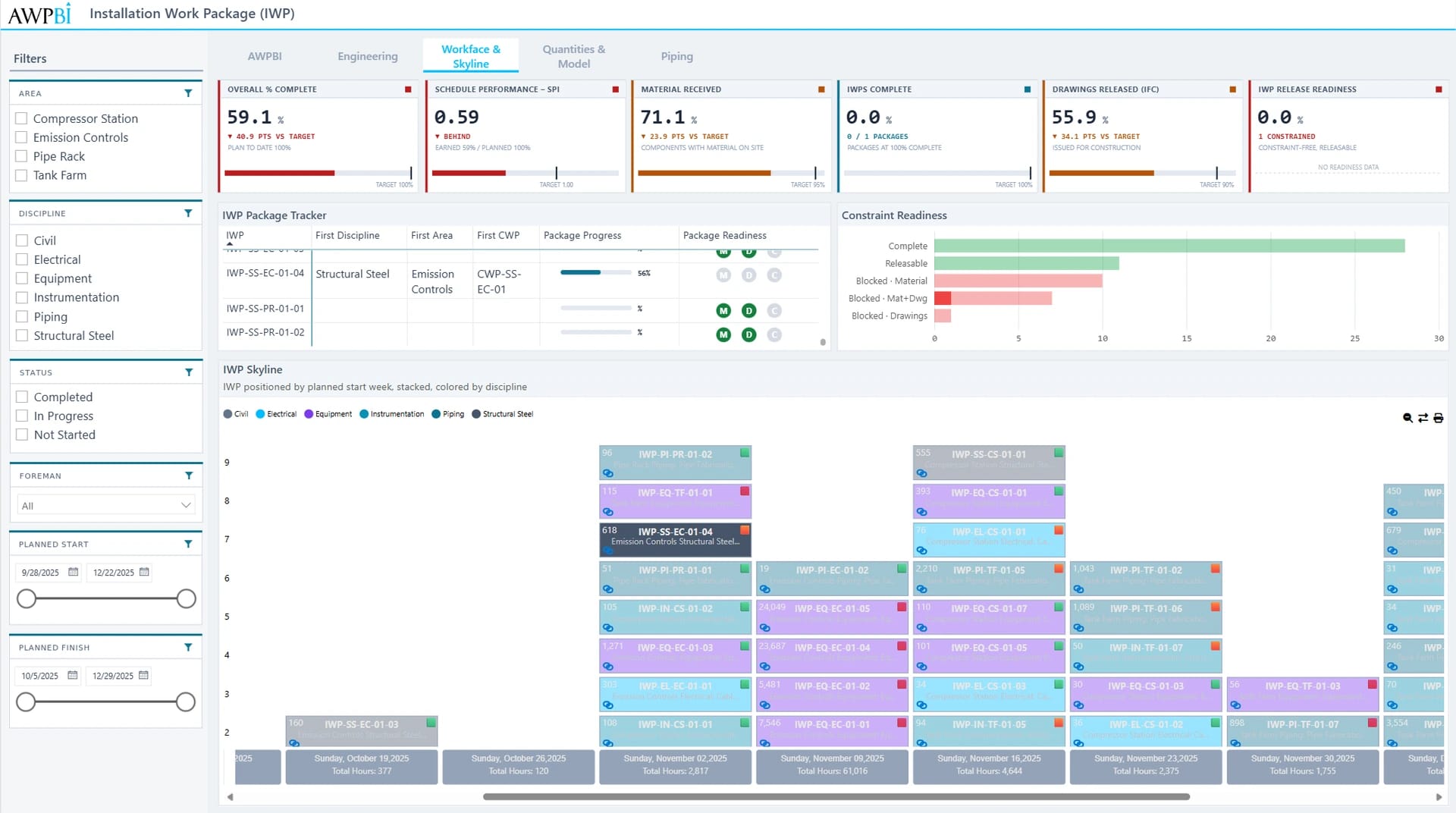 SkylineA free, Power BI certified visual of package status against schedule dates, with EWP, PWP, CWP, IWP, and System views.
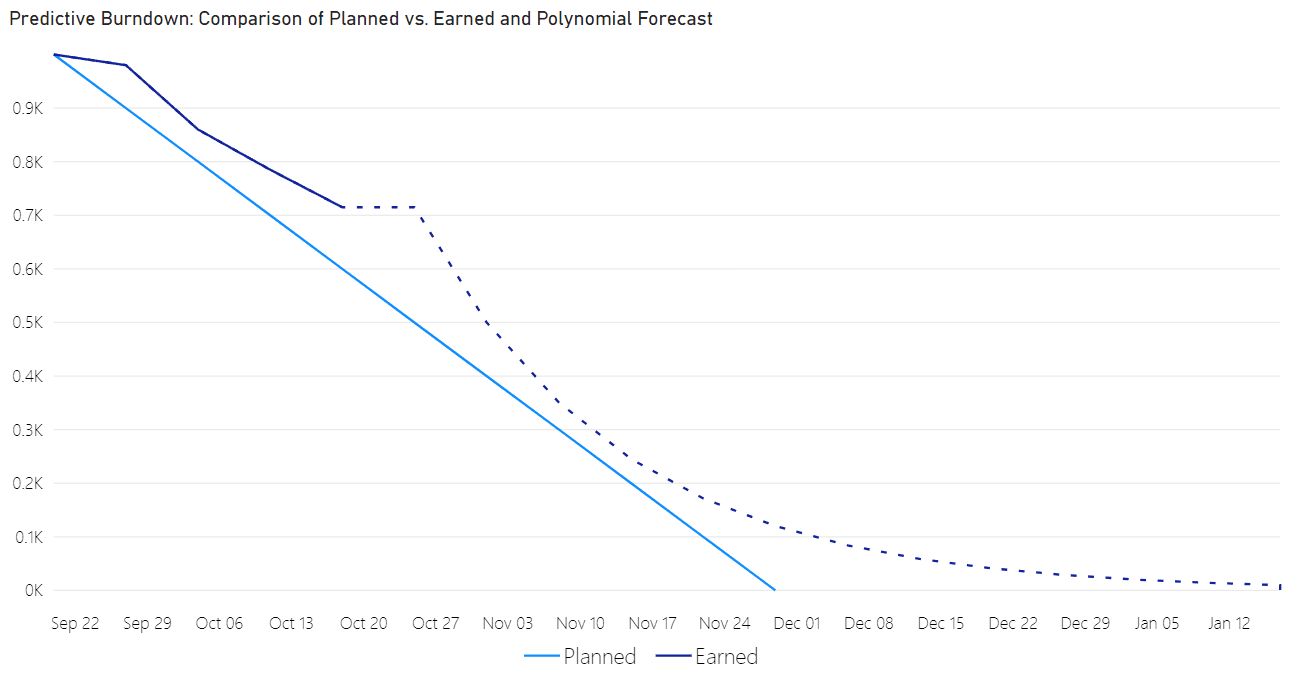 BurndownA free Power BI visual of work remaining as packages close, with five forecasting models built in.
Talk to a team that has measured progress by work package on capital projects from $20M to $10B.