
AWP procedures
Project-specific procedures naming the roles, the RACI, the meeting rhythm, package rules, and the change process, issued through the DMS and audited against for the life of the project.
We stand up advanced work packaging on capital projects: write the procedures, define the package taxonomy, facilitate the path of construction, build the AWP Matrix, and audit the program through execution.
Project-specific procedures naming the roles, the RACI, the meeting rhythm, package rules, and the change process, issued through the DMS and audited against for the life of the project.
CWA breakdown, discipline codes, and a [TYPE]-[CWA]-[DISC]-[SUBDISC]-[SEQ] naming convention, frozen before the first ISO or drawing issuance and adopted contractually by fabricators and vendors.
Facilitated sessions that put operations, engineering, procurement, construction, and commissioning at one table and produce a dated CWP sequence in the Level 3 schedule, with EWP and PWP need dates derived from it.
Assess
Review the contract, the execution plan, the schedule, and the systems in place, and record where the project stands against AWP practice.
Define
Write the procedures, agree the taxonomy and discipline codes with construction, and freeze the naming convention before the first drawing issues.
Facilitate
Run the path of construction workshops, date the CWP sequence in the Level 3 schedule, and stand up the AWP Matrix as the controlled register.
Audit
Score adherence at fixed phase gates, deliver the correction list with named owners and due dates, and shift the focus to workface planning as construction ramps up.
An advanced work packaging program stands on a small set of controlled artifacts. Procedures name the roles, the meeting rhythm, and the package rules. Data Requirements state what every system must carry and which system owns each field. Reference Libraries and Specifications fix the classifications and formats that engineering, procurement, and fabrication deliver against. The work itself is planned, executed, and measured through packages, each type with one owner, one place in the schedule, and one fixed Definition of Complete. We write these artifacts with the project team and put them into force, starting at FEED or sanction, while the naming convention and the package hierarchy are still cheap to set.
The stand-up runs in a fixed order. The package taxonomy and the naming convention come first, agreed with construction and frozen before the first ISO or drawing issuance, then adopted contractually by fabricators and vendors, so a package carries one name across P6, the DMS, the material system, and the 3D model for the life of the project. Path of construction workshops follow, with operations, engineering, procurement, construction, and commissioning at one table. The construction team decomposes each CWA into CWPs in the 3D model, working from equipment set dates and pipe starts, and every EWP and PWP takes its scope and need dates from that agreed sequence. The AWP Matrix holds the result, one controlled register of every package and its relationships, issued weekly with a change log. No package is created, split, merged, or re-allocated outside it.
Once execution starts, the program is held by audit. Phase audits run at the start of steel and pipe fabrication, before construction mobilization, and at 10, 40, 70, and 90 percent construction complete. Each one scores adherence as a percentage of total attainable and closes with a correction list carrying named owners and due dates; past the ten percent mark the focus shifts to workface planning, where a working program shows itself as a steady flow of constraint-free IWPs. Our team has stood up, run, and audited AWP on capital projects from $20M to $10B since 2012. The method itself is covered in what advanced work packaging is; this page describes the work of putting it in force.
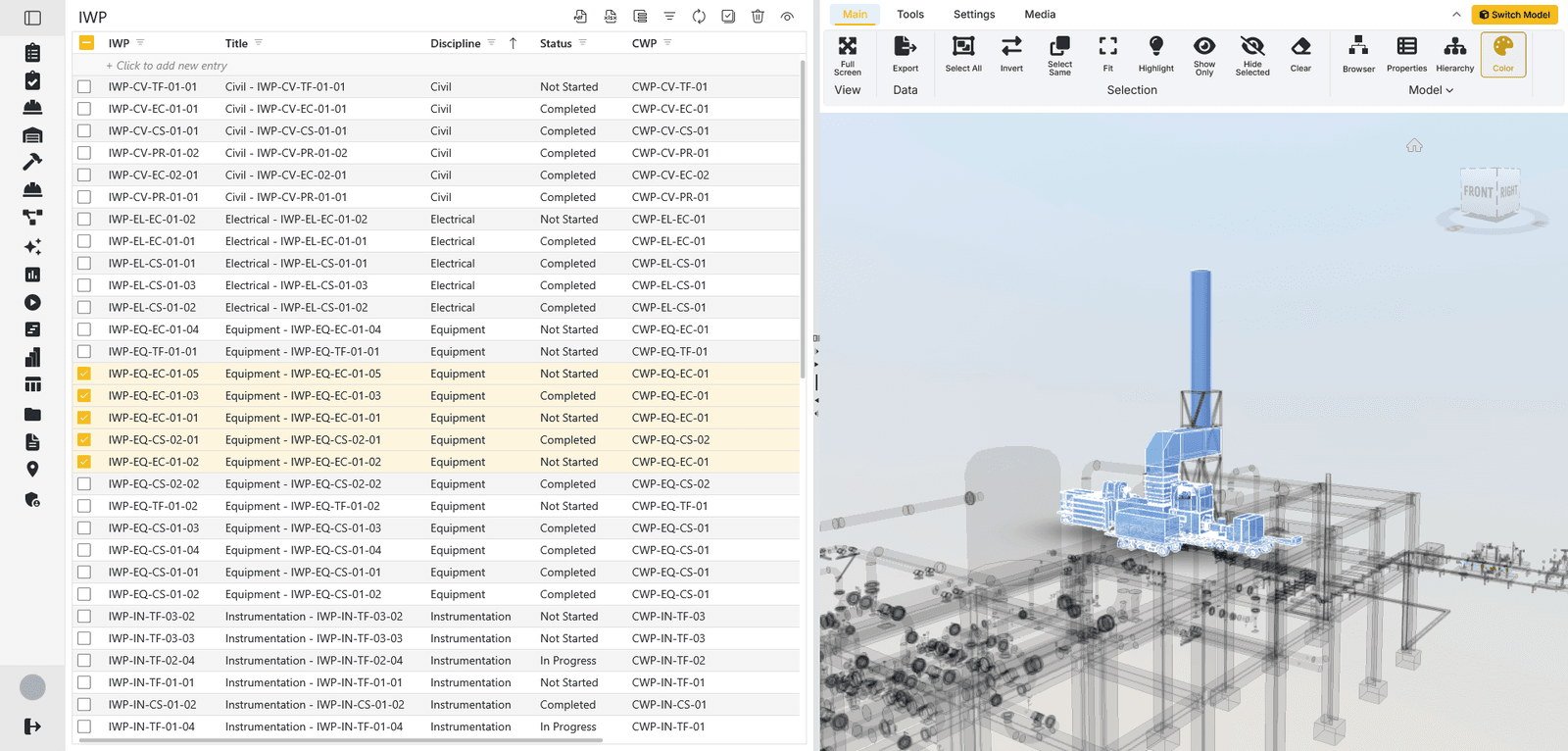 openAWPAdvanced work packaging software with user-defined forms, fields, and package hierarchy, deployed on your own infrastructure.
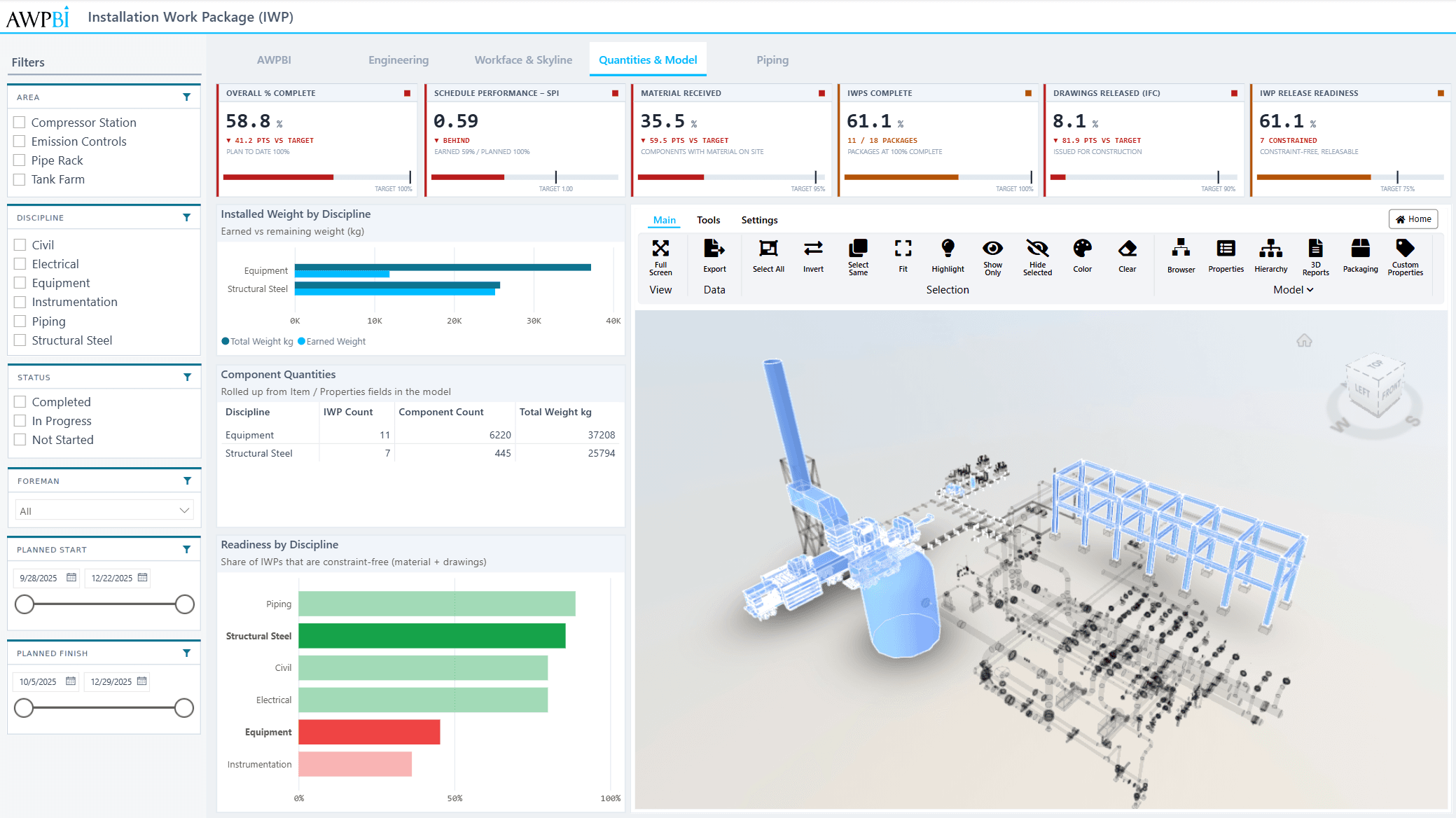 3D for Power BIA Power BI custom visual that colors the 3D model by package and constraint status inside the reports your project already reads.
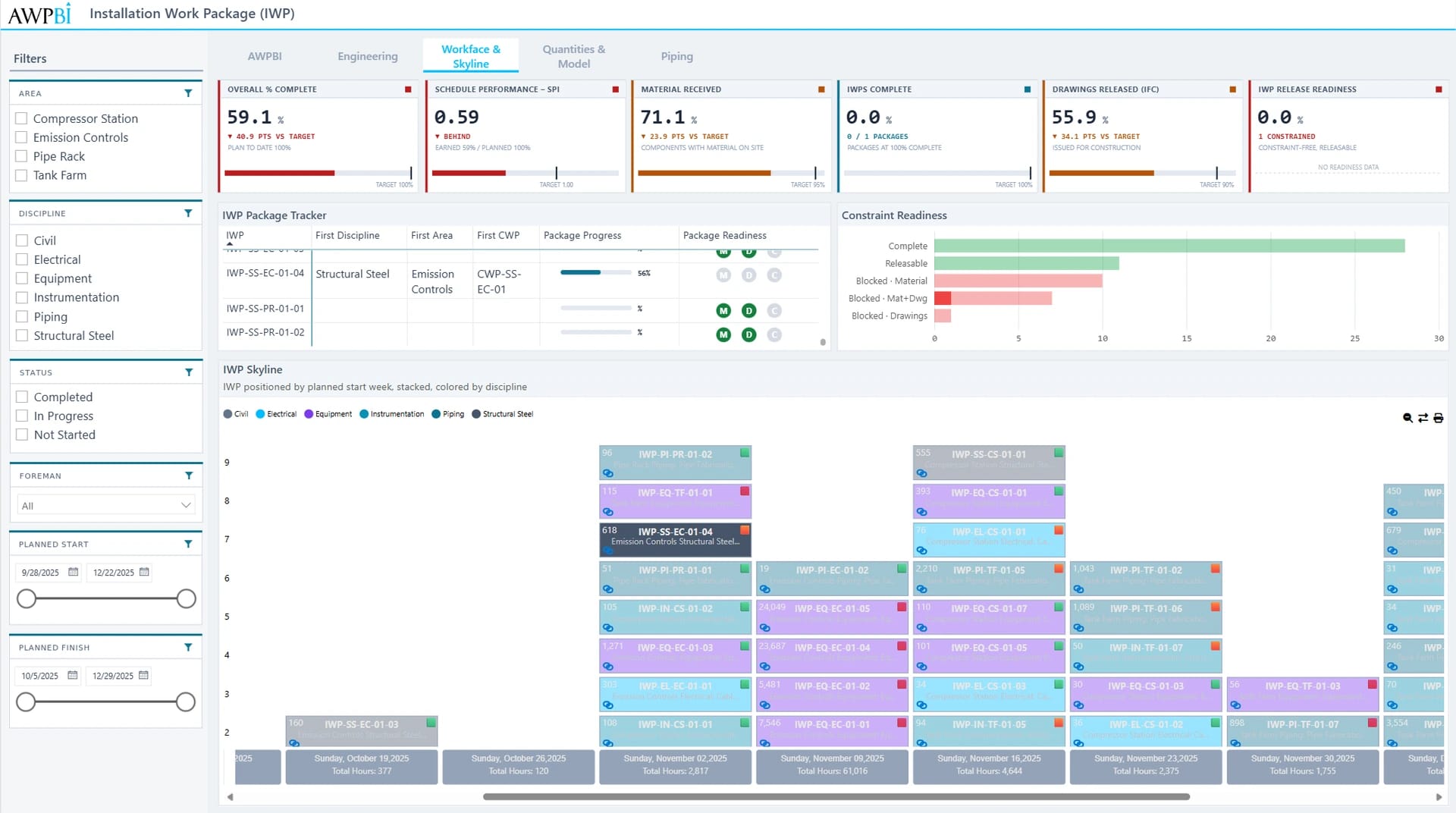 SkylineA free, Power BI certified visual that plots package status against schedule dates, with EWP, PWP, CWP, IWP, and System skyline types.
Talk to practitioners who have written the procedures, facilitated the workshops, and audited the results on live capital projects.