
A common data environment on an industrial project is the governed set of systems that hold project information, the connections between them, and the rules that keep them in agreement. It is a set of systems and a discipline together, with one accountable owner for every dataset.
Each System Owns One Kind of Record
The document management system is the system of record for documents and their revisions. The data warehouse is the system of record for structured data, which means the registers, the lists, the material take-offs and the status tables that reporting reads. The schedule holds the Level 3 plan by work package. The 3D model holds geometry and the attributes that tie objects to packages and tags. The AWP software holds packages, constraints and releases. SharePoint carries collaboration and the raw files, and originals stay where the project already keeps them.
None of these systems replaces another. The environment is the agreement about which one is right for which question, and the connections that let a tag, a document or a package be followed from one to the next.
Disagreement Is a Defect with an Owner
The register says a drawing is issued, the document system holds an older revision, and the model does not contain the object. In a common data environment that disagreement is a logged defect with a dataset owner, a due date and a trend, and it stops being a Monday morning spreadsheet.
The weekly routine that finds and closes those defects is described in weekly data reconciliation. The point that matters here is ownership. Every dataset has one accountable owner, the engineering contractor's information manager owns the checks, and the owner's information manager audits them.
Reports Read from the Systems of Record
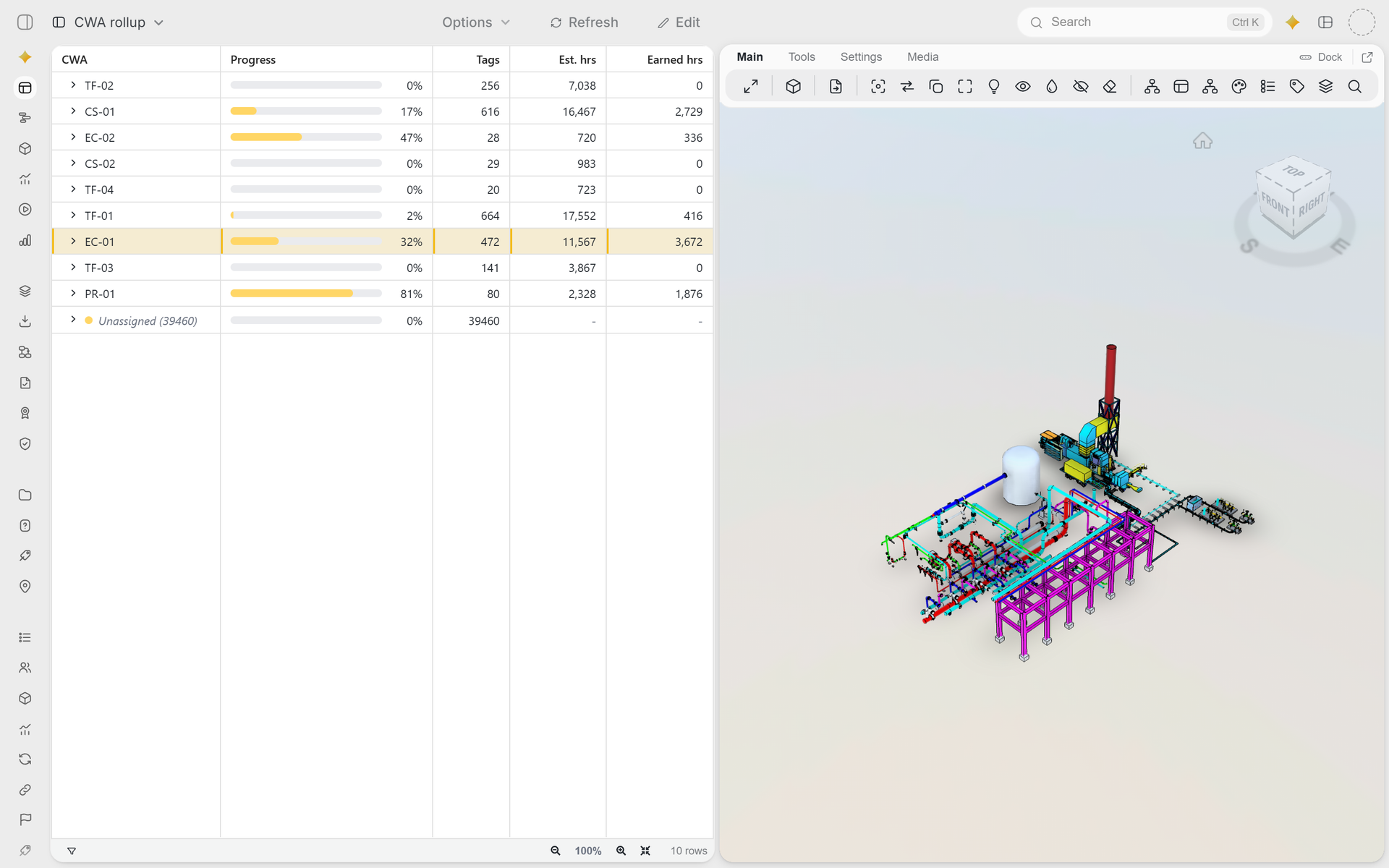
Most people on a project never open the AWP software or the warehouse. They read Power BI reports, the 3D and 4D views, and the documents their discipline uses, at the revision that is current. Those reports read from the systems of record and add nothing of their own, so the number in the report is the number in the warehouse.
What a Common Data Environment Is Not
It does not replace the schedule, the document management system or the ERP. Each remains the authority for what it owns, and the environment checks the joins between them. A project that tries to copy everything into one new database creates a second truth and a reconciliation problem it did not have before.
Who Runs It When the Project Team Moves On
The information manager role is named from FEED and holds the standards, the access, the interface register and the data quality actions. When execution ends, the registers and the validated data land in the owner's maintenance system, and the project record stays in the owner's tenant.
The environment is built in the owner's tenant, and the software, the data and the registers stay with the owner when the engagement ends. The information management service stands up the standards and the weekly rhythm behind it.